Know Thyself
If (hu)man is the measure of all things, what is the measure of human?
Meta-Self Lab
School of Psychology, Nanjing Normal University
Home
Welcome to the Meta-Self Lab!
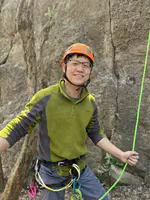
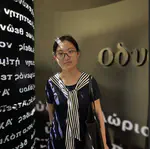
The lab is led by Prof., Dr., Hu Chuan-Peng at the School of Psychology, Nanjing Normal University, Nanjing, China. We are interested in how human beings process self-related information, with a “3M” approach: meta-science, (cognitive) modeling, and (psychological) measurement. We are also trying to apply the “3M” approach to the mental health issues in the real world.
We values openness, transparency, and reproducibility. As the methods and practices in psychological science are ever-evolving, we keep learning new methods and adopting best practices to make our research as rigorous and robust as possible. Whenever possible, we use open source software such as jsPsych, Python, and R for our research. All our work are preprinted before submission. Whenever possible, we preregister our studies before data collection/analyses.
So far, we have contributed multiple open datasets: data for Human Penguin Project (data; data paper, & original study); data of Chinese Version of Free Will and Determinism Plus Scale (data, data paper, original study, and updated study in 2024); a meta-dataset of neuroimaging studies of self-referential process of human (dataset, data paper; related paper and its ALE maps); an extended Chinese social evaluative words list (data, data paper, and code); and an evolving trial-level data from studies that employed self-matching task (dataset). Please see our publications or google scholar for the preprints.
Equality is another core value of our lab. We are dedicated to fostering a culture where everyone involved is respected and every idea is valued.
Research Fields
the use of scientific methodology to study science itself
A knowledge representation that contains knowledge about us
a mathematical model that embodies a set of statistical assumptions concerning the generation of sample data
Team



































Publications


Blog Posts
Contact
- hu.chuan-peng@nnu.edu.cn
- School of psychopy, Nanjing Normal University, 122 Ninghai Road, Gulou District, Nanjing, Jiangsu 210098
- DM Me
Join Us
-
🎓 We Are Seeking Doctoral Candidates in Psychology
-
💬 Instruction Language: Chinese
-
💰 Tuition: Full Scholarship
-
✉️ If you wish to join us, send E-mail to hu.chuan-peng@nnu.edu.cn.
-
🇨🇳 For Students in mainland China, please see this blogpost for details